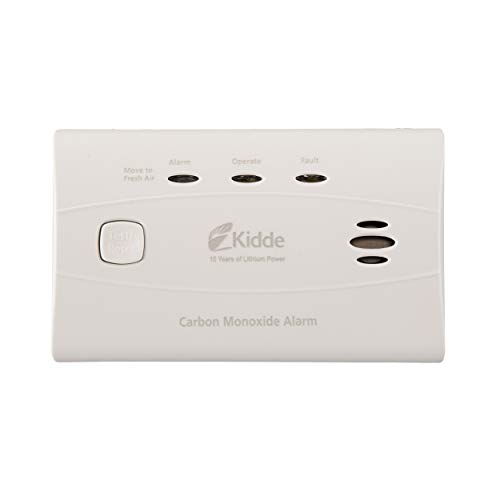
Kidde C3010 CO alarm, 10-year sealed battery
Pending verification Check price on Amazon (paid link)
Affiliate Disclosure: This page contains Amazon affiliate links. We earn a commission at no cost to you.
Standalone CO alarms compared by power source and features, plus why a discontinued smoke+CO combo model is not among the picks.
The 4 products: Kidde C3010 CO alarm, 10-year sealed battery · Kidde KN-COP-DP-10YH plug-in CO alarm · First Alert combo alarm, 10-year sealed battery · X-Sense SC07 combo alarm with ppm display
You already know you need a carbon monoxide alarm (see the linked Problem page for why CO detection matters) and are deciding between specific models. The two currently-available options below cover the same core job, standalone CO detection, with different power sources and feature sets.
Both the Kidde C3010 and the Kidde KN-COP-DP-10YH are standalone CO alarms with a 10-year sealed/backup battery, but they are not the same purchase decision:
Neither is a "smart" or app-connected device. Pick the C3010 if you want a set-and-forget battery unit with no outlet dependency; pick the KN-COP-DP-10YH if a live PPM readout or the visual-alert feature matters to you and you have a suitable outlet.
Read the full Kidde C3010 review for its sourced certification and specification details.
A third product exists in this dataset for this category: the Google Nest Protect (2nd Gen, Battery), a smoke + carbon monoxide combination alarm. It is not included as a current pick here. Google announced in March 2025 that it discontinued Nest Protect manufacturing and named a First Alert product as the successor line. Existing retail inventory may still be purchasable, but recommending a manufacturer-discontinued device as a current choice would be misleading, so it is deliberately excluded from the active picks above rather than presented as a normal recommendation.
A chirp is the alarm talking about itself, not about the air: usually a low battery, sometimes the end of its service life, and the two are easy to confuse because a fresh battery quiets the second one for a few seconds. What each pattern means covers how to tell them apart before you buy a replacement you may not need.
A combination alarm replaces two devices with one, and the argument for it is boring and sound: fewer units means fewer batteries to forget and fewer ceilings to reach. The argument against is equally boring: when one sensor reaches end of life, the whole unit goes, including the sensor that was still fine.
First Alert, 10-year sealed battery. The sealed design removes the failure mode this site documents in detail on the beeping page: nobody takes the battery out at two in the morning, because there is no battery to take out. At end of life the unit is replaced whole, which is what the ten years are counting down to.
X-Sense SC07. Carries a parts-per-million display, which is the feature worth paying for if anyone in the house is trying to tell "zero" from "low and rising". A display turns an alarm from a yes-or-no device into something you can read after the boiler has run.
Both are combination units, so mounting follows smoke-alarm guidance as well as CO guidance: where to place a CO alarm covers the part people get wrong. A smoke and CO alarm is not a gas alarm: for a natural gas leak you need a sensor listed for it, explained in do carbon monoxide detectors detect natural gas?.


