First Alert RD1 Radon Test Kit Review
Affiliate Disclosure: This page contains Amazon affiliate links. We earn a commission at no cost to you.
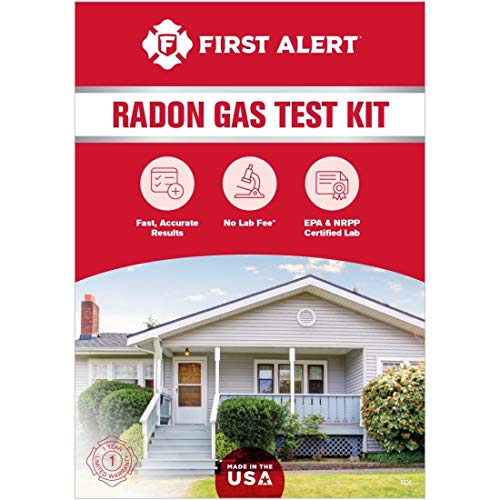
First Alert RD1 radon test kit
Recommended With Caveats Pending verificationFirst Alert's own materials reference an EPA-adjacent accreditation program whose current status this site could not confirm against today's radon-accreditation system (NRPP): an open question, not a confirmed or refuted one.
Check price on Amazon (paid link)Quick answer
The First Alert RD1 is a short-term, charcoal-canister radon test: expose it for 48 hours, mail it to the analyzing lab, and get a result back. It's a simple, low-cost way to get a first radon reading. The manufacturer's own materials point to an EPA-adjacent accreditation program, but that specific program reference dates to the kit's 2004 manual, and independent research this phase could not confirm the current status of that exact claim, covered fully below.
What it does
According to First Alert's product documentation, the RD1 is a passive charcoal-adsorption test: the canister contains activated carbon that absorbs radon's radioactive by-products over a fixed exposure window. Per the kit's own user manual, that window is exactly 48 hours, and the kit is invalid if exposed longer than 96 hours. After exposure, the canister is mailed to the manufacturer's contracted laboratory (named in the manual as Alpha Energy Labs, in Carrollton, TX) for analysis, and a written result is mailed or emailed back.
Key specifications
According to First Alert's user manual for this kit:
- Test type: Short-term charcoal adsorption (not continuous monitoring)
- Exposure duration: 48 hours exactly; invalid if left exposed beyond 96 hours
- Placement: 2+ feet above the floor, in the lowest lived-in level of the home; away from HVAC vents, moving air, high humidity, and direct sunlight
- Pre-test conditions: Closed-house conditions (windows/doors closed) for 12 hours before and during the test
- Analyzing lab: Alpha Energy Labs (named explicitly in the manual)
- Turnaround: the manual states results arrive "within two weeks" of the lab receiving the kit; First Alert's website separately states results are available "3-5 business days after lab receipt". These aren't necessarily in conflict (the second figure may describe only the lab's own processing time, not total mail transit), but the two sources weren't found reconciled into one number, so both are given here rather than picking one.
- Device warranty: 1 year against defects in material and workmanship
What we like
- Simple, well-documented procedure. The manual gives specific, actionable placement and timing instructions rather than vague guidance.
- Named laboratory. First Alert's manual names the actual analyzing lab (Alpha Energy Labs) rather than leaving the process opaque, useful if a reader wants to verify the lab independently, which is part of what made the certification research below possible at all.
- Low commitment. A short-term test is a reasonable, low-cost way to get a first reading before deciding whether a longer-term test or a continuous monitor is warranted.
Limitations
- The accreditation claim needs more scrutiny than the packaging suggests. See "Safety and certification" below. This is the most important caveat for this product.
- One-time result, not ongoing monitoring. Radon levels vary by season and weather; a single 48-hour test is a snapshot, not a year-round picture. A reader who wants ongoing readings should look at a continuous monitor instead.
- Turnaround isn't instant. Between mailing the kit and receiving results, expect roughly two to three weeks in practice, per the manufacturer's own manual.
- US-only. First Alert's own product page states the kit is recommended for use only within the United States.
Who should choose it
- A homeowner or renter who has never tested for radon and wants a straightforward first reading.
- Someone in a real estate transaction who needs a documented short-term test (the manual gives specific dual-kit guidance for that use case).
Who should skip it
- Anyone who wants ongoing, real-time readings rather than a single mailed-in result. See our review of a continuous radon monitor instead.
- Anyone testing outside the United States: the manufacturer states this kit is intended for US use only.
Safety and certification
What First Alert states: the kit's own user manual states on its cover that it "Meets EPA RMP Requirements," and the company's website separately describes the kit as "listed under the EPA Radon Gas Measurement Proficiency Program."
What we found when we looked closer: the manual containing that exact claim is dated 2004. Current (as of this research) US radon-measurement accreditation is administered primarily through the National Radon Proficiency Program (NRPP), operated under AARST and ANAB/ANSI-accredited: a different structure than the EPA-administered program the manual's language describes. We checked NRPP's own public list of approved devices directly: neither "First Alert" nor "RD1" appears on it. Separately, Alpha Energy Labs (the laboratory that actually analyzes RD1 kits, per the manual) does appear to have some current NRPP-linked device association and at least one state radiation-protection agency's lab certification, based on independent sources, though we did not find a single source directly confirming that this specific device code is the one used inside the RD1 kit.
What that means: we are not calling this claim confirmed, and we are not calling it false. The analyzing lab has real, checkable regulatory anchoring; the retail brand's own specific "EPA RMP" claim is worded in a way that predates the accreditation system currently in place. That claim stays unconfirmed by this site: a longer, more detailed writeup does not turn a manufacturer's claim into an independently confirmed fact.
Sources
- First Alert RD1 official user manual (manufacturer, PDF, BRK Brands, 2004). Supports: test procedure, exposure duration, placement instructions, named laboratory, warranty, and the exact "EPA RMP" claim text. No stable URL for this specific manual PDF was recorded during research, so it isn't linked here.
- First Alert's product page (manufacturer, current). Supports: general product description, US-only recommendation, and a separately-worded accreditation claim.
- NRPP's public approved-devices list (independent, current): checked directly to confirm "First Alert" and "RD1" do not appear on it by name. No stable URL for the specific list checked was recorded during research, so it isn't linked here.
- Amazon's product listing for this ASIN: identity/availability context only, not used for any specification or safety claim; the affiliate link below is generated automatically, not hand-typed (this site's content never hardcodes a second Amazon URL alongside it).
No customer review text, star rating, or Amazon-listing safety claim was used as a source for any statement in this review.
About this review
Silent Home Hazards has not tested this device firsthand. We have not exposed a kit, mailed it, or received results ourselves. Every claim above is sourced to First Alert's own published materials or to a named, checkable independent source, and is written as a sourced claim rather than a first-hand finding.
Related
Related collections
- Radon Detector or Radon Test: Which One Answers Your Question
- Radon Mitigation Fans: What They Do and Who Sizes Them